Longevity has become one of the most crowded, confusing corners of the wellness world.
Biohackers, physicians, podcasters, and supplement companies are all competing for your attention with protocols, products, and promises. Some of it is grounded in legitimate science. A lot of it is not.
This is a beginner's guide to what the research actually supports, stripped of hype and focused on what is worth your time and attention.
Lifespan vs healthspan
Before getting into specifics, it is worth understanding the distinction between two concepts that often get conflated.
Lifespan is simply how long you live. Healthspan is how long you live well, with physical capability, cognitive sharpness, and genuine quality of life intact.
Most serious longevity research today is focused on healthspan rather than just lifespan. The goal is not simply to add years to your life but to add life to your years. These are related but not identical objectives, and the distinction shapes which interventions are worth prioritizing.
Most people do not want to live to 105. They want to be capable at 85.
What the research consistently supports
Amid all the noise, there is a core set of lifestyle factors that appear consistently across the strongest longevity research. These are not exciting or novel. They are foundational. The boring answers age into the right answers.
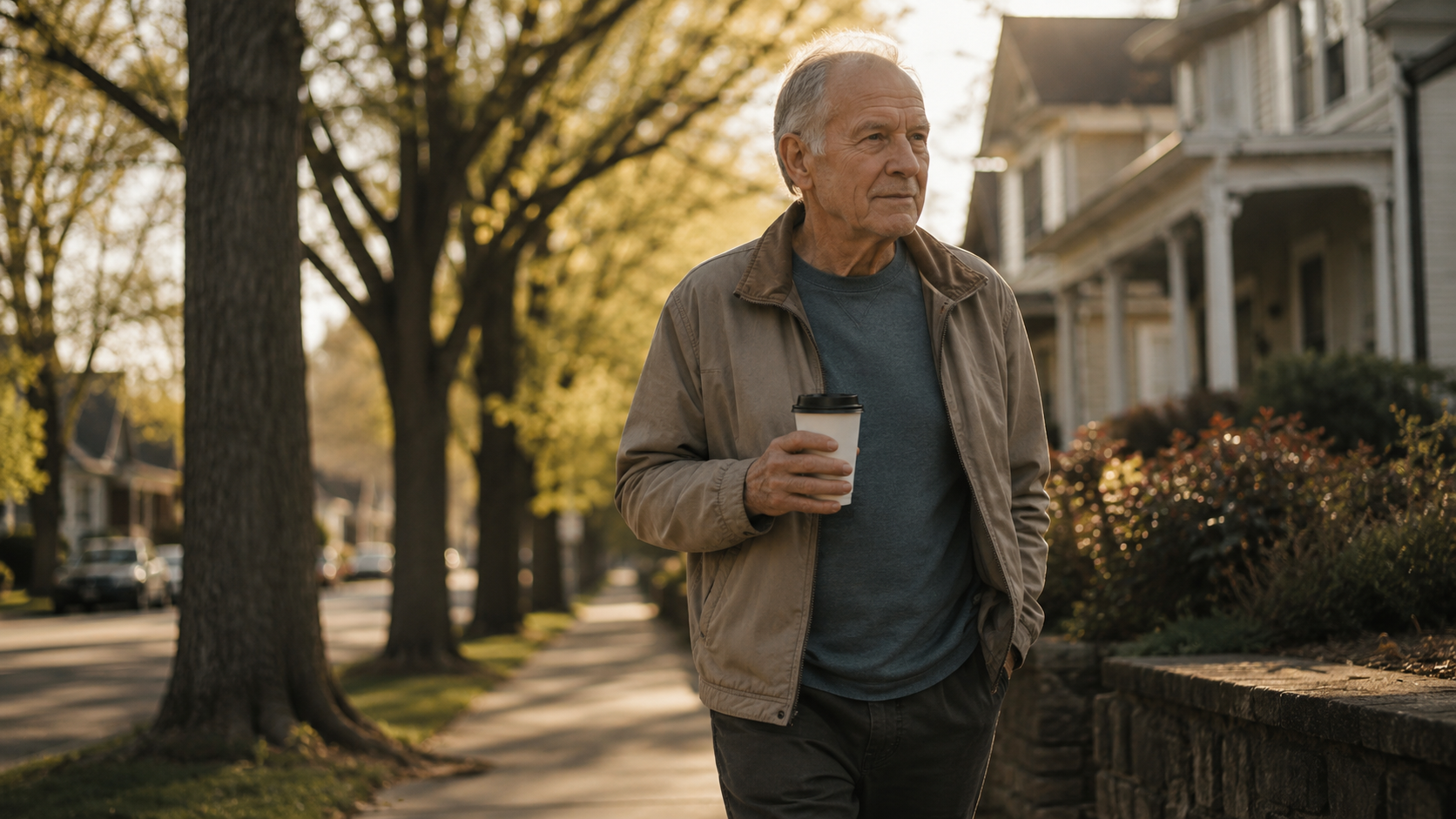
Take Frank. Frank is 71. He still climbs onto his own roof to clean the gutters every fall. He hikes with his grandkids on weekends. He carries his own groceries up two flights of stairs without thinking about it. None of those are remarkable feats on their own. Compare them to the average 71-year-old, however, and they are the entire point.
Frank has not biohacked his way to where he is. He started lifting weights in his thirties because his doctor told him to, and never stopped. He walks the same loop around his neighborhood every morning. He sleeps eight hours. He eats his wife's cooking. He has been married to that wife for 47 years and sees his kids most Sundays. That is the protocol.
There are five things Frank has done well. The research suggests they are also the five things that matter most.
1. Resistance training.
The relationship between muscle mass and longevity is one of the most robust findings in aging research. Muscle mass declines naturally with age (a process called sarcopenia), and that decline is associated with increased risk of falls, metabolic disease, cognitive decline, and early mortality.
Resistance training is the most effective intervention for preserving and building muscle at any age. Studies consistently show that people who maintain muscle mass into their sixties, seventies, and eighties have dramatically better health outcomes across virtually every metric.
Think of muscle as the savings account that funds your old age. The more you have built by sixty, the longer it lasts.
If you do nothing else for longevity, lift weights.
2. Cardiovascular fitness.
VO2 max, a measure of your cardiovascular fitness, is one of the strongest predictors of longevity researchers have identified. People in the top quartile of cardiovascular fitness for their age have dramatically lower all-cause mortality rates than those in the bottom quartile.
The good news is that VO2 max responds well to training at any age. Regular aerobic exercise (walking, running, cycling, swimming) meaningfully improves cardiovascular fitness and the longevity benefits that follow.
3. Sleep quality.
Sleep is where the body does the majority of its repair and maintenance work. Chronic poor sleep is associated with accelerated aging, increased inflammation, impaired cognitive function, and elevated risk of virtually every chronic disease.
Seven to nine hours of quality sleep per night is not a luxury. For longevity purposes it is arguably the highest-leverage single behavior you can focus on.
If sleep is broken, every other intervention is a withdrawal from a depleted account.
4. Nutrition focused on whole foods.
The nutritional research on longevity is complex, and often contradictory, at the level of specific dietary approaches. But there is strong, consistent evidence supporting one broad principle: diets built primarily around whole, minimally processed foods are associated with better long-term health outcomes than those built around processed and ultra-processed foods.
Beyond that, the research supports adequate protein intake for muscle preservation, particularly important as you age, and the general pattern of eating a wide variety of vegetables, legumes, whole grains, and quality protein sources.
5. Social connection.
This one surprises people, but the research is consistent and significant. Social isolation is associated with dramatically increased mortality risk. Some studies suggest the effect is comparable to smoking in overall health impact.
Strong social relationships, a sense of community, and feeling connected to something larger than yourself appear to be genuine contributors to both lifespan and healthspan. The longest-lived populations on earth (Sardinia, Okinawa, Loma Linda) all share strong, persistent social fabric. Frank's 47-year marriage and Sunday dinners with his kids are not a coincidence.
Where the research gets more complicated
Beyond the foundational five, the longevity space gets considerably murkier.
Supplements, cold exposure, fasting protocols, red light therapy, and various other interventions all have proponents with compelling arguments, and some have preliminary research behind them. Most have not been studied at the scale or duration needed to make confident claims about their longevity effects in humans.
This does not mean they are ineffective. It means the evidence base is thinner, and you should calibrate your expectations and investment accordingly.
The general principle worth applying: the further an intervention is from the foundational five, the more skeptical you should be about dramatic longevity claims.
If supplements are the layer you want to add on top, the bar for inclusion should be high. Three have evidence strong enough to recommend without hedging, and we have packaged them at clinical doses below.
Minimalist Longevity Stack
Three supplements with serious evidence, packaged at clinical doses. Skip the rest until your basics are in order.
Learn MoreA practical starting point
If you are new to thinking about longevity deliberately, here is the simplest possible framework.
- Start with sleep. If your sleep is poor or inconsistent, address that first. The downstream effects of poor sleep undermine virtually every other longevity intervention.
- Add resistance training. Two to three sessions per week of progressive resistance training is enough to produce meaningful muscle preservation and the associated longevity benefits.
- Add cardiovascular work. Three to five sessions per week of moderate-intensity aerobic activity covers the cardiovascular fitness component. This does not need to be intense. Walking, cycling, and swimming all count.
- Eat mostly whole foods. Without getting prescriptive about specific diets, moving your nutrition toward whole, minimally processed foods, and away from ultra-processed ones, is reliably beneficial.
- Invest in your relationships. This one gets less attention in longevity discussions than it deserves. Time spent building and maintaining genuine social connections is time well spent from a health perspective too.
The bottom line
The most evidence-backed longevity protocol available to you right now does not require expensive supplements, advanced diagnostics, or cutting-edge interventions.
It requires consistent resistance training, adequate cardiovascular exercise, quality sleep, whole-food nutrition, and genuine human connection.
Everything else is a layer on top of that foundation. The foundational five are bricks. Everything else is paint. Build the bricks first.
For the supplement layer specifically (and what is and is not worth taking), see our evidence-based longevity stack. For the cardiovascular fitness side, our piece on Zone 2 training is the cleanest practical primer we have.